platform · the structure in section
The whole structure, in one section.
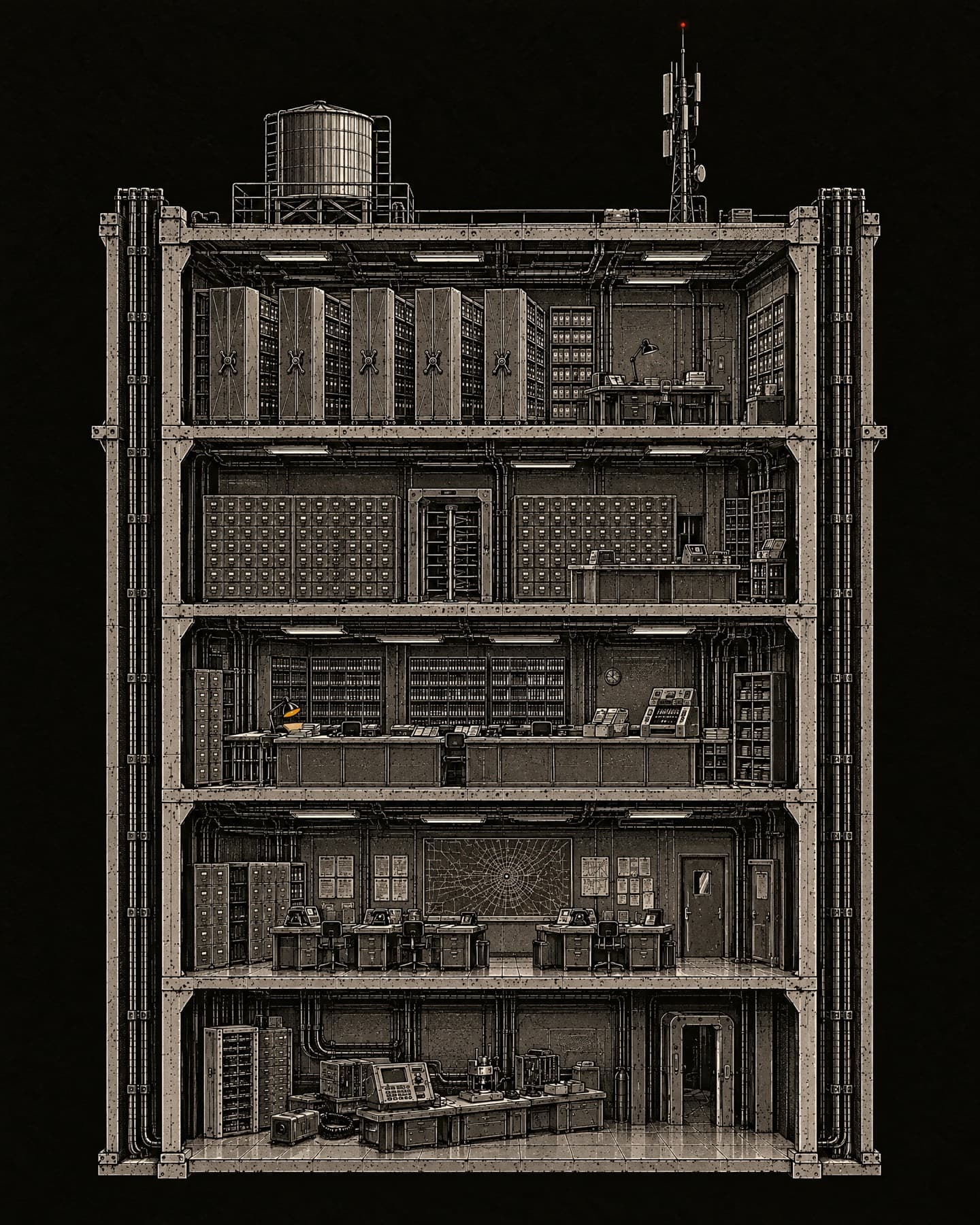
Q is organised the way a business is organised, because authority is what it carries. The drawing is the building. Each layer is a page of its own.
01
The division.
Q itself: the execution plane, the ledger and the approvals inbox. The workshop in the basement builds, tests and signs off the equipment every floor above uses, and does not go on the mission.
Runs, approvals, spend and the journal exist today. The one ledger across systems is in design.
02
The departments.
Four domains of authority, one per floor: operations, finance, people, records. A department holds the mandates its roles work under and is where every receipt is filed.
Today a department is how receipts are filed and how the registry's families are grouped.
03
The roles.
A job, with a record. The credit controller at the finance counter, the lettings coordinator in operations, the onboarding clerk in people. Each works under its department's mandates and keeps a record made of its receipts.
The first roles are being built on Elementary's own departments. None is offered yet.
04
The mandates.
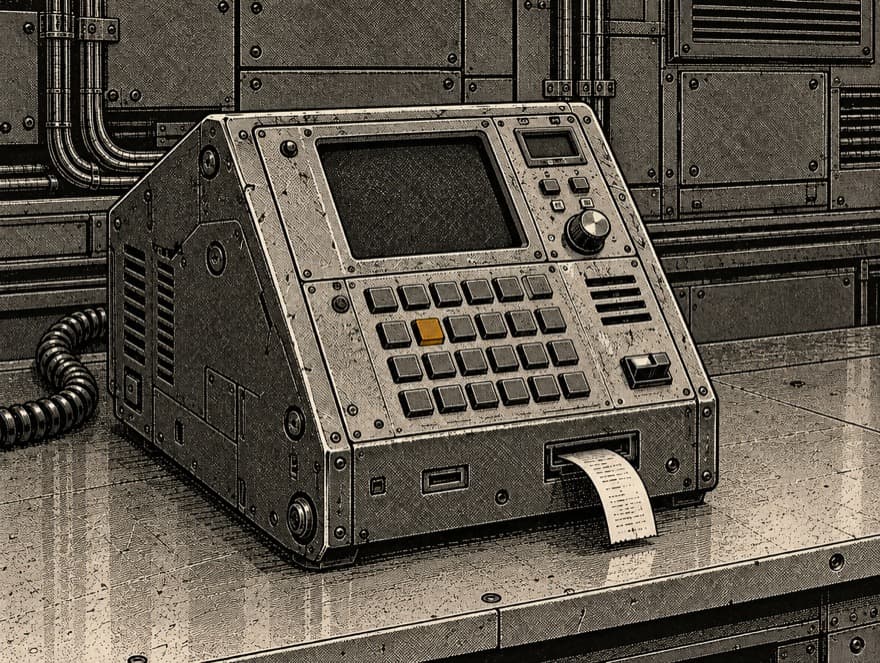
Standing authority, scoped and budgeted: what a role may do, up to what amount, how many times, until when. The card clipped to the station.
Not yet built. Today every protected action asks a person, and the ask is bound to the exact action.
05
The runs and receipts.
A run is a durable piece of work on Temporal: it survives restarts, pauses for a person, resumes where it stopped. A receipt is what it returns: department, role, evidence, approval version, spend and state, replayable from the journal.
Consumption of an approval authorises one dispatch. Delivery is at least once, and the receipt says so.
06
The systems.
The conduits: what each department is equipped with. Yours, connected as they are. Or Elementary's, made by the same house: Route Royal, Vellon, Wocha, Black Ink and Chancery. The receipt states each system's grade.
No system is first class yet. Google Workspace and ClickUp act; the rest supply evidence.
one run, first call to last
Between the request and the receipt.
What the building does with a run, in five steps. Each step has a contract with its limits in the documentation.
01
Retrieve.
Evidence gathered under your permissions, with row-level security forced in PostgreSQL.
02
Ground.
The answer cites what it used. A quality record says what was retrieved, used and not supported.
03
Approve.
Protected actions stop and ask. The decision is bound to tenant, principal, run and action version.
04
Settle.
Spend reserved before any model is called, settled after, reconciled against provider records.
05
Replay.
Every step, decision and cost in the journal. A run can be replayed. A receipt settles it.
the state of the building
What is available, and what is not.
Every public operation is listed in the capability registry with its policy, scopes, limits and availability. Readiness is never assumed.
- 8
- stable
- operations the registry marks stable
- 35
- beta
- qualified locally, production gates pending
- 15
- alpha
- mounted behind flags or not yet implemented
- 0 / 7
- production gates
- none passed yet, stated here until that changes